What to Do When Your YouTube Channel Stops Growing
Nothing on YouTube is permanent. Not the views, not the revenue, not the format that has been working all year, and not the channel itself.
That sounds bleak on a first reading. It is not meant to be. It is the single most useful thing I understood in nine years of building channels for English-speaking audiences, and it is what turns a stalled channel from an identity crisis into a problem with a checklist attached.
Because here is the pattern: a video gets picked up, then it does not. A niche is wanted, then the audience moves on. Ad rates are decent, then they slide. A channel climbs, then one change in what gets recommended flattens the whole thing. If you have been doing this a while, none of that surprises you. If you are new, it can feel like the end.
Views are temporary. What stays is the skill.
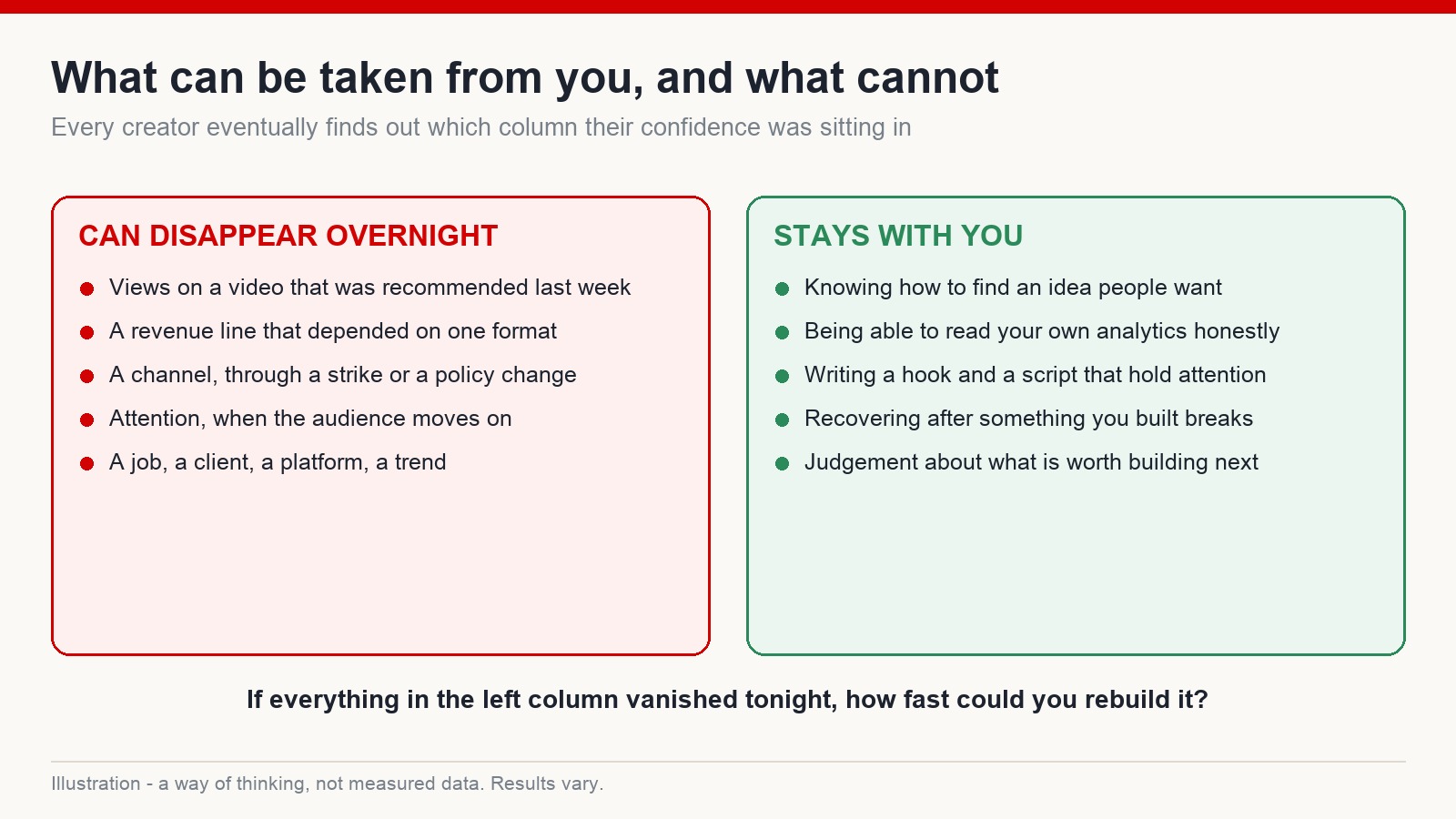
Sort your confidence into the right column
Every creator eventually finds out which column their sense of self was sitting in.
Things that can vanish overnight: the views on a video that was being recommended last week, a revenue line that depended on one format, a channel through a strike or a policy change, attention when the audience moves on, a job or a client or a platform or a trend.
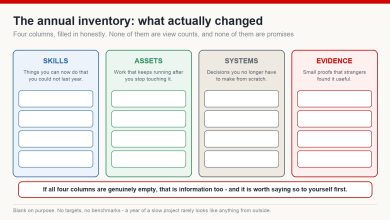
Things that stay with you: knowing how to find an idea people actually want. Being able to read your own analytics without flinching. Writing a hook and a script that hold attention. Recovering after something you built breaks. Judgement about what is worth building next.
If your self-worth is stapled to the left column, a drop in views costs you sleep, a slow month causes panic, a rival’s success flattens you, and one hostile comment makes you want to stop. If it is anchored in the right column, the same events are just information.
The question worth asking, calmly, before you need the answer: if everything in the left column disappeared tonight, how fast could I rebuild it?
Success, attention and revenue all run in cycles
A viral video does not mean you have won. A good month does not mean the channel is durable. A run of recommendations does not mean you have figured out the platform. Equally, a flat quarter does not mean you are finished.
People who understand this get less high on the wins and less flattened by the losses, and that alone makes them better operators. They react to a drop by looking at data instead of by rewriting their identity.
Do not keep pushing on something just because you already paid for it
There is a trap that catches serious people specifically, because it is made out of commitment rather than laziness.
You know the niche has stopped fitting, but you have put months into it. You know the format has become a grind, but a few of those videos did well. You know the approach is drifting towards volume over value, but you are afraid of what happens if you stop.
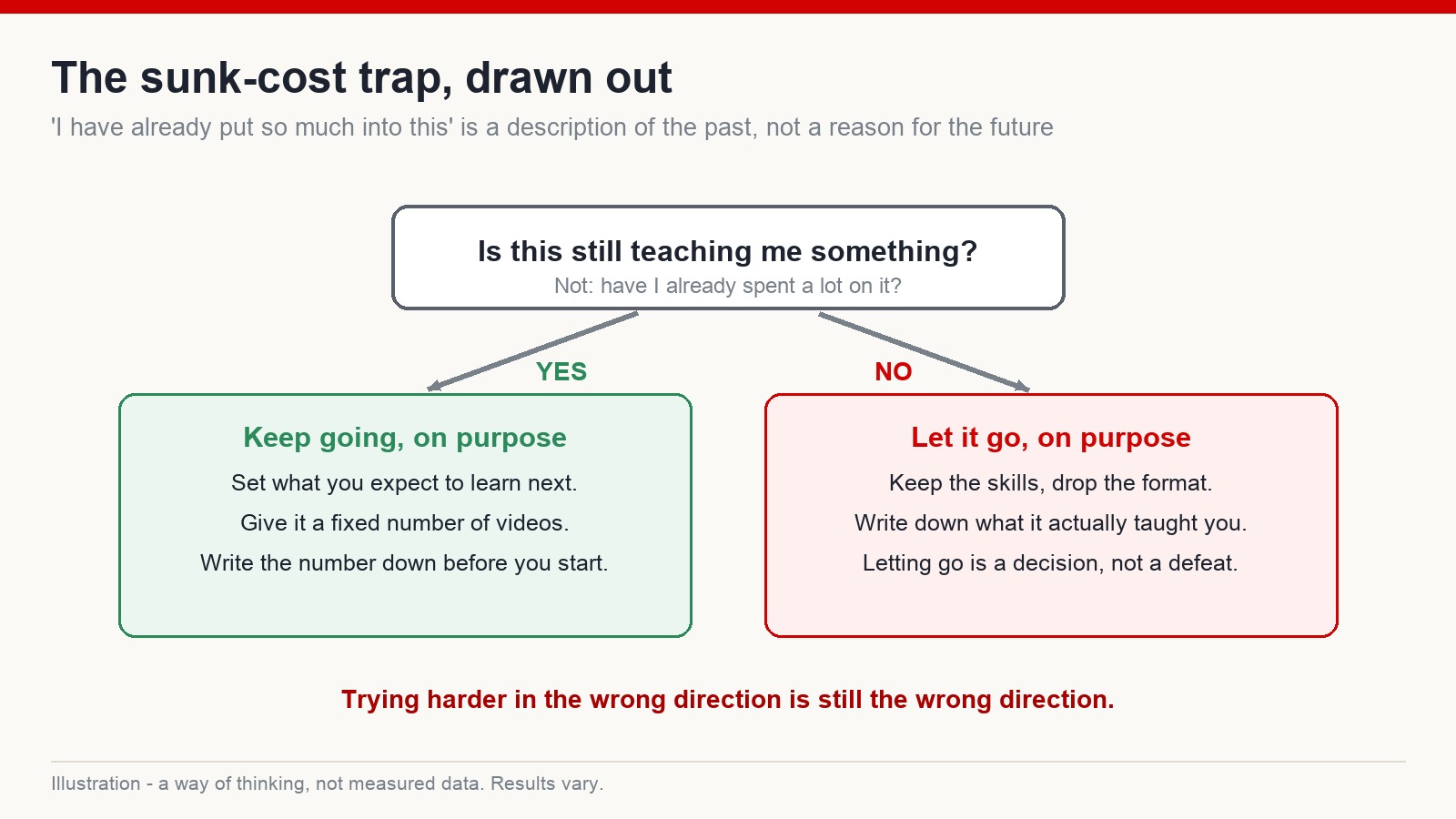
“I have already put so much into this” is a description of the past. It is not a reason about the future. Effort in the wrong direction is still the wrong direction, and the longer it runs the more it costs.
The better question is: is this still teaching me something?
If yes, keep going deliberately. Write down what you expect to learn next, give it a fixed number of videos, and set that number before you start so the decision is not made in a bad mood later.
If no, let it go deliberately. Keep the skills, drop the format. Write down what it actually taught you. Letting go on purpose is a decision, not a defeat — the alternative is drifting for another six months while telling yourself you are being persistent.
When views drop, read the numbers in this order
The instinct after a bad run is to change five things at once: new thumbnail style, new topic, new length, new schedule, new intro. It feels decisive. It teaches you nothing, because when things move you will have no idea which change did it.
A diagnosis changes one thing. Here is the order I work through.
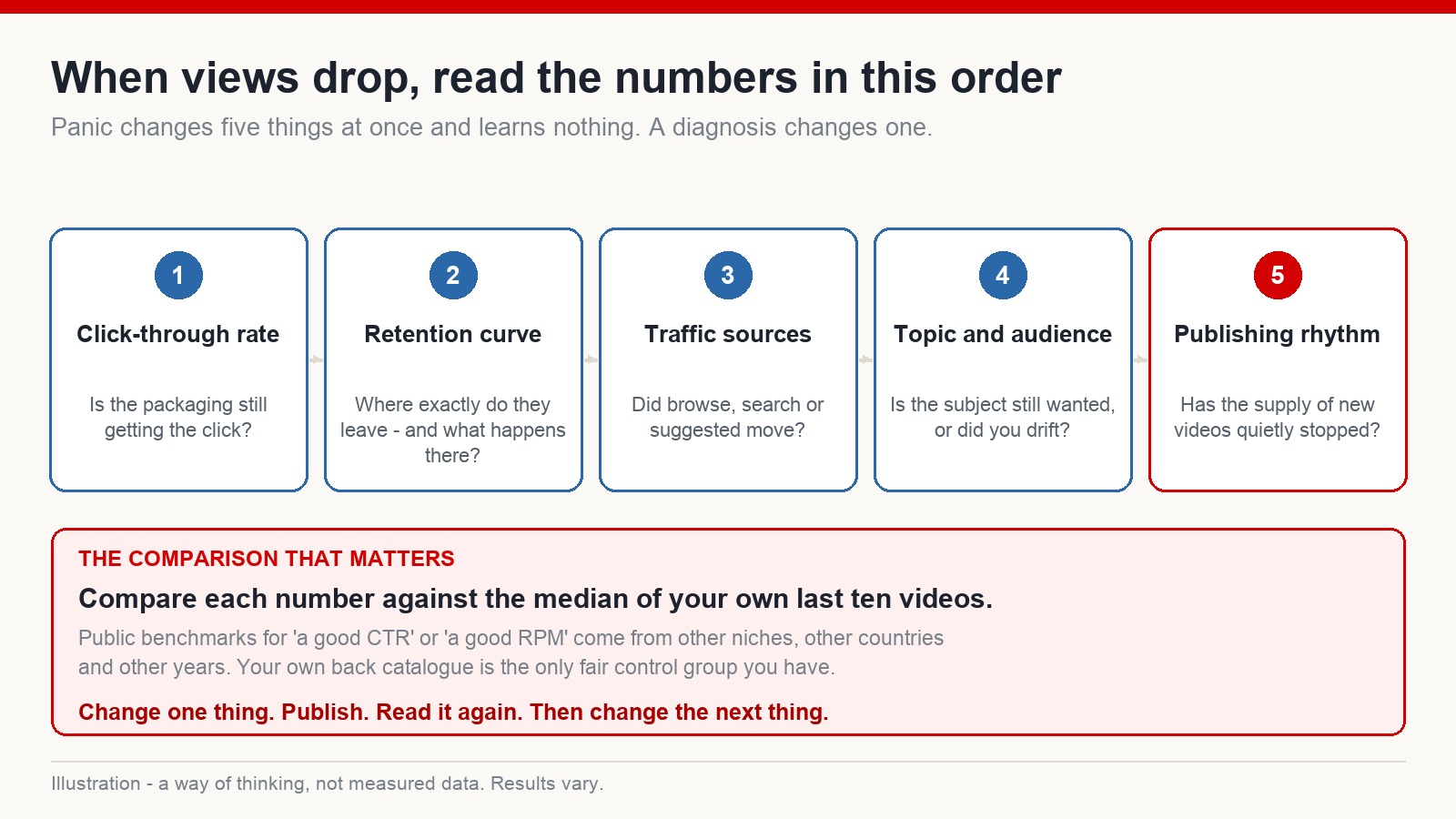
- Click-through rate. Is the packaging still earning the click, or did impressions stay flat while clicks fell?
- Retention curve. Where exactly do people leave — and what is happening on screen at that timestamp? This is the most under-read chart in the whole dashboard.
- Traffic sources. Did browse, search or suggested move? A collapse in one source is a very different problem from a general decline.
- Topic and audience. Is the subject still wanted, or did you gradually drift away from the viewer who originally showed up?
- Publishing rhythm. Has the supply of new videos quietly stopped? Sometimes the algorithm did nothing at all and you simply published less.
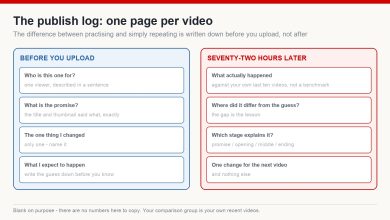
And the comparison that matters: measure each of those against the median of your own last ten videos. Public benchmarks for a “good” click-through rate or a “healthy” retention curve come from other niches, other countries and other years. Your own back catalogue is the only fair control group you have.
Change one thing. Publish. Read it again. Then change the next thing. Slower than panic, and roughly a hundred times more informative.
Use AI to go faster, not to go emptier
Worth saying directly, since it is where a lot of channels quietly break themselves right now. AI is genuinely useful for research, outlining, drafting, asset creation and building a repeatable workflow. It is a bad idea as a machine for producing volume with nothing inside it.
The difference is not really ethical, it is practical: content made to fill a slot does not hold attention, and attention is the only currency the platform actually pays out on. Speeding up a process that produces something worth watching is leverage. Speeding up a process that produces filler just gets you to the failure faster.
No views, make another one. Channel breaks, build another one.
The mindset that survives this business is unglamorous and specific:
- Thumbnail underperformed? Test another one.
- Hook is weak? Rewrite it and check the retention curve again.
- Retention drops at ninety seconds? Open the script and look at what is there.
- Traffic source collapsed? Find out which one, and what changed around it.
- Niche genuinely wrong after you fixed the execution? Research properly and move once, with evidence.
That is a long-game posture. It is the opposite of concluding that YouTube is finished because one video flopped, or that you are not cut out for this because a month was slow.
A channel can be lost. If you still have the skills, you still have a route. A video can flop. If you can still analyse, you still have something to fix. A bad stretch is a chapter, not an ending.
Nobody is coming to do this for you
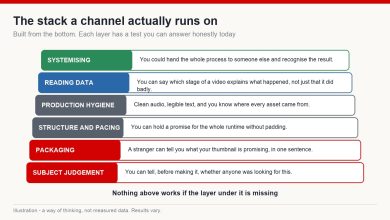
Mentors can point at a direction. A course can shorten the search. A community can pull you up on a flat week. Tools can make you faster. None of them will press record, read your retention curve, or take responsibility for what you build.
This is the part I would over-index on if I were starting again. Learn things in a way that produces evidence — after studying something, there should be a video, a test, a number, a result. Otherwise learning becomes a very sophisticated form of procrastination, where you accumulate knowledge indefinitely and never publish anything.
You do not need to know everything. You need to know enough for the next step.
If everything is temporary, build the thing that is hardest to lose
If revenue can disappear, build the ability to create value that earns it. If views can disappear, build the ability to make something better than your last one. If a channel can break, build a system you understand well enough to rebuild. If a job can vanish, build the capacity to teach yourself the next thing.
That is not living in fear. It is just being prepared — knowing that if it went, you could stand back up.
Results on YouTube vary enormously between creators, niches and markets, and the rules change without warning. That is exactly why the durable asset is never the number on the screen. It is what you would still have the morning after the number disappeared.
Frequently asked questions
Why did my YouTube channel stop growing?
Usually one specific thing rather than a general decline. Work through it in order: click-through rate, then the retention curve, then traffic sources, then whether the topic still matches the audience you attracted, then whether your publishing rhythm slipped. Compare each against your own recent videos, not against a benchmark from somewhere else.
Is a channel with high views actually safe?
No channel is. Views depend on what gets recommended, on audience interest, and on packaging that is still working — all of which move. High views today are a result, not a guarantee. The durable part is your ability to produce another video that earns them.
Should I quit a niche that is not working?
Only after you have genuinely improved title, thumbnail, hook, pacing and audience fit, and it still will not move. Before that, “wrong niche” is usually a comfortable explanation for an execution problem. When you do change, change once and with evidence.
What is a creator’s real asset?
Not the channel or the subscriber count. It is the ability to find ideas people want, write and package them, read data honestly, build a repeatable system, and start again after something breaks. Those transfer between channels, formats and platforms.
Should I use AI to make YouTube videos?
For research, ideas, outlining, drafting and workflow — it helps a lot. For mass-producing thin videos, it is a fast route to a channel nobody watches. The test is whether the output is something a real person would choose to sit through.
If you want a structured way to build those skills for an English-language channel, that is what I teach at mmoyoutube.com.